






Restoration of the Fortress of the Cerro of Montevideo
Historical Overview / Construction and purpose
The Fortress of the Cerro of Montevideo, renamed in 1882 as the General Artigas Fortress, is one of the three major colonial fortifications that still exist in Uruguay.
Its construction was ordered in 1809 by Governor Francisco Javier de Elío in order to protect the lighthouse and reinforce the defenses of Montevideo’s bay against a possible third British invasion.
Located at the highest point of the city, its pentagonal design without projecting bastions reflects defensive criteria different from those of Santa Teresa and San Miguel.
Throughout the 19th century, the fortress fulfilled military, sanitary and symbolic functions. It served as a lazaretto, prison and ceremonial battery, and was also the scene of historical events such as the 1870 assault during the Revolution of the Lances.
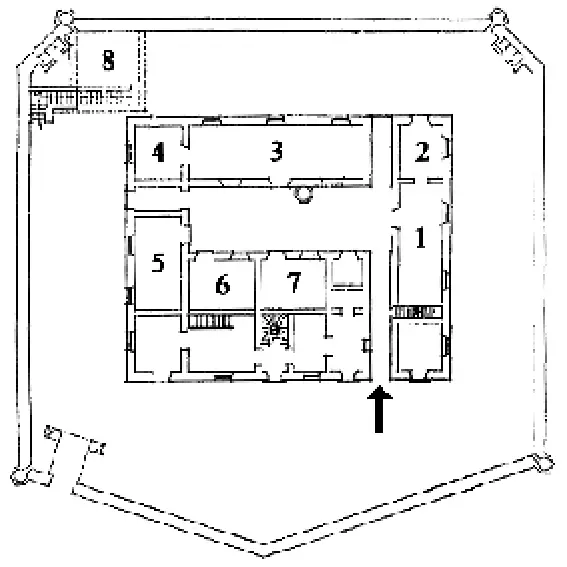
Historic plan of the Fortress of the Cerro
of Montevideo in Uruguay
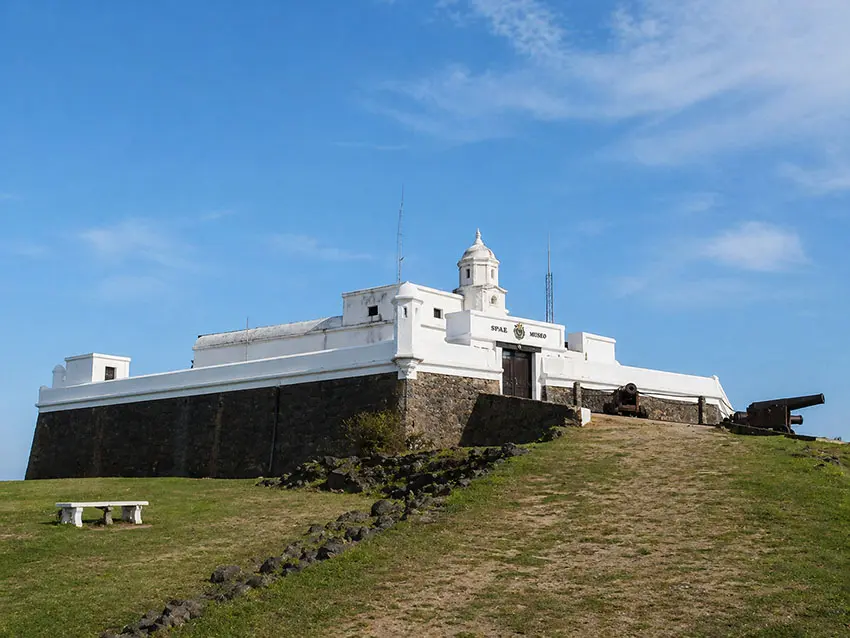
Exterior view of the Fortress of the Cerro of
Montevideo overlooking Montevideo Bay
Restoration and Museum
In 1931, it was declared a National Monument, and its restoration became part of the heritage recovery movement led by Horacio Arredondo under the commission responsible for the restoration of the Santa Teresa Fortress.
In 1939, it opened as a Military Museum of the National Army, with exhibition rooms dedicated to Uruguay’s military history, the figure of Artigas and the evolution of military uniforms.
View and Current Significance
From its walls, the Bay of Montevideo can still be observed, guarded by cannons that span more than three centuries of history.